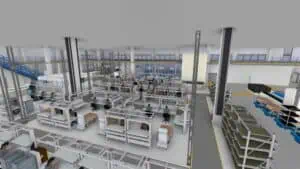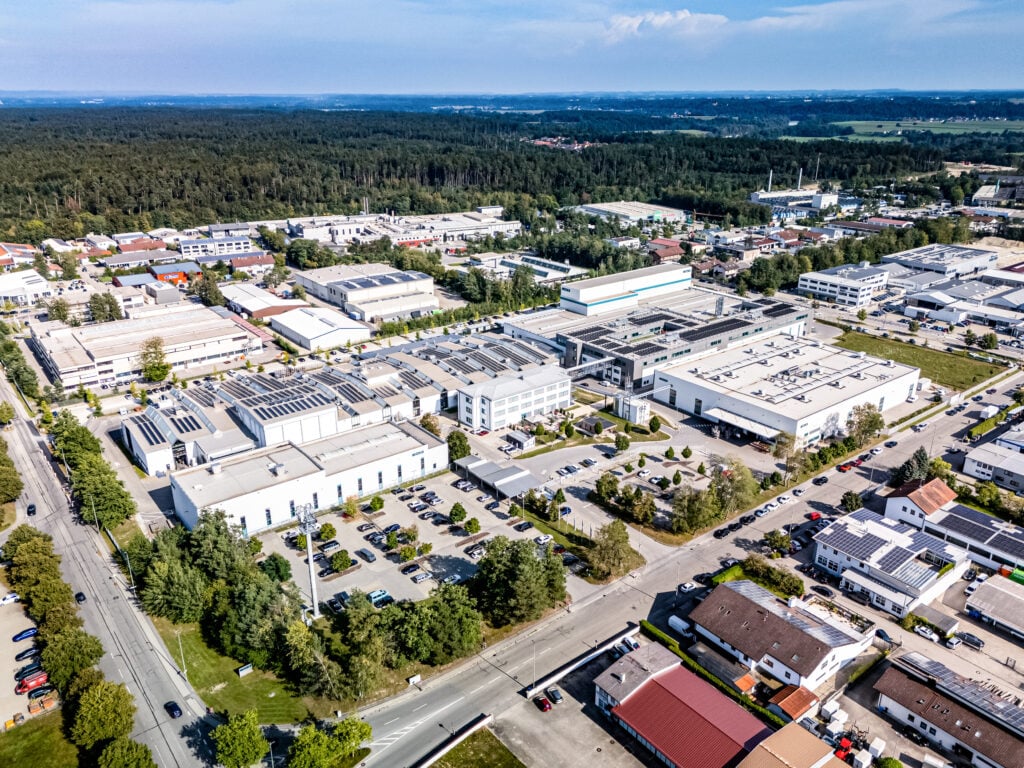
A digital factory model provided the foundation for the robust planning of the entire transformation. The project gave rise to a new way of working in international factory planning.
When Conventional Planning Tools Reach Their Limits
In 2019, NETZSCH Pumpen & Systeme launched a comprehensive transformation project at its Waldkraiburg site. The goal was to bring together areas previously spread across three plants into a modern production and logistics structure.
The project was carried out in two phases. First, a new production hall was built, featuring an automated high-bay warehouse as well as areas for assembly, testing, painting, and shipping. The existing component production was then transferred step by step into a lean-oriented layout.
The conventional planning tools proved too slow and inflexible for the demands of the project. Every layout change had to be made by internal design engineers in a time-consuming process, while the large CAD files pushed the systems to their limits. For the ongoing transformation, this process increasingly became a bottleneck.
“We wanted to take planning into our own hands and implement our ideas directly. visTable® gave us the ideal platform for this – and much more.”

A Digital Factory Model as the Planning Basis
After a successful trial phase, the decision in favor of visTable® was made. The team initially used the software to plan the new production hall. However, the tool quickly developed into the central planning tool for the entire project.
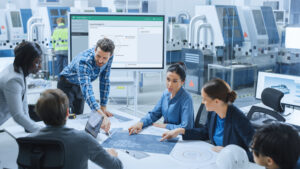
Instead of working in isolated files, layouts, material flows, and crane and infrastructure concepts came together in a single, shared factory model. With input from the specialist departments and from external technical planners (electrical engineering, HVAC, etc.), layout variants could be worked out holistically and across departments in a short time.
“visTable® brings everything together – layouts, material flows, and planning variants on one shared planning basis.”
Relocating Production Step by Step
The real acid test came in phase 2 of the project: the step-by-step relocation of the existing component production into a lean-oriented layout. More than 30 machines had to be relocated during ongoing production, and the associated infrastructure renewed, without jeopardizing the ability to deliver.
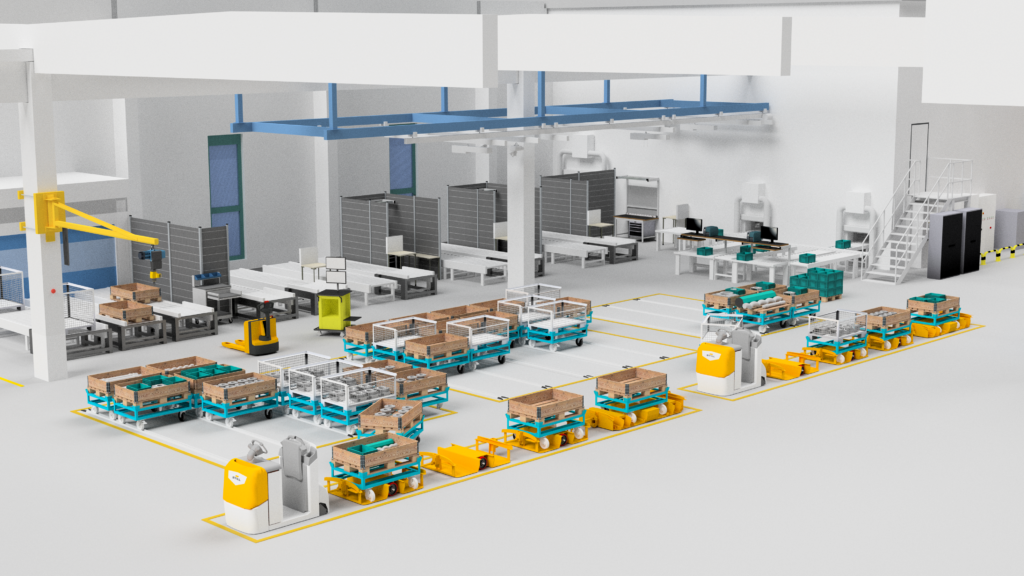
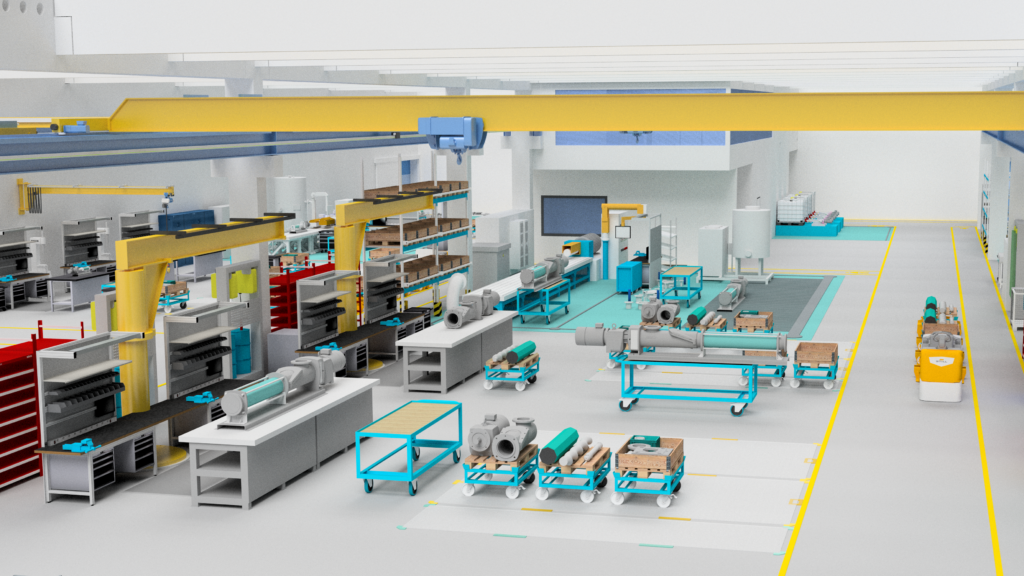
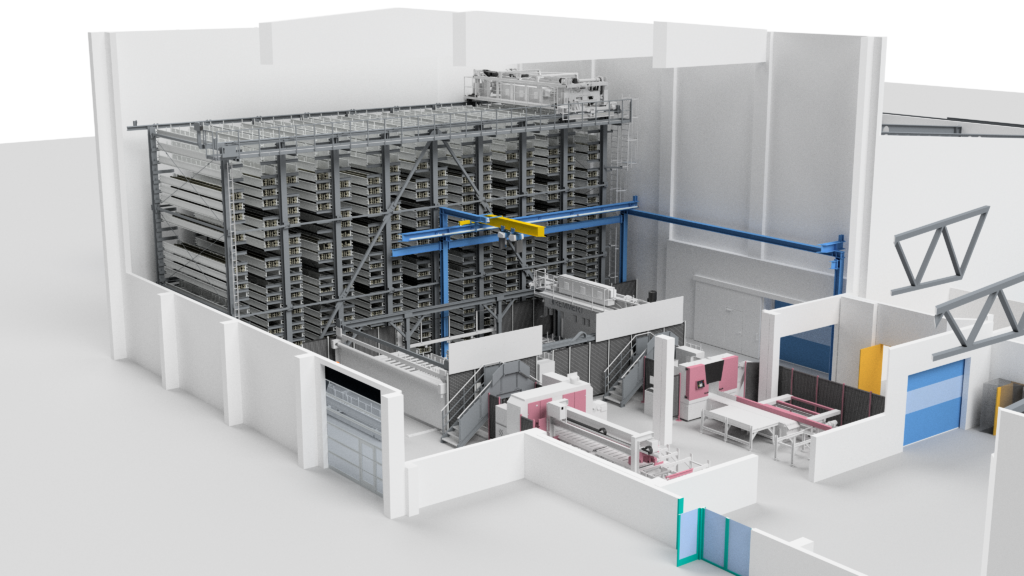
This is where the value of visual planning became clear: the team digitally ran through different relocation scenarios and construction stages in advance. Potential collisions and critical dependencies on building services were identified before a single machine was touched.
“visTable® is really strong when it comes to comparing different layout variants and quickly adapting plans. The planned relocation steps were implemented smoothly. That showed that our planning was more than robust.”

From a Project to a New Planning Standard
By introducing visTable®, NETZSCH was able to organize factory planning independently. Today, layouts, variants, and adjustments are created directly in the Production Engineering department and continuously refined.
The digital factory model improved collaboration between the departments involved. Variants could be evaluated faster and decisions made on a shared planning basis. The quality of discussions and coordination increased significantly.
The planning methodology developed in the project was subsequently transferred to other sites. Today, visTable® is used not only in Waldkraiburg but also in Brazil, India, China, and the USA for factory planning and optimization projects.
“The planning methodology from Waldkraiburg is now also used at our international sites. Digital factory planning simplifies cross-site collaboration and accelerates planning processes worldwide. As a result, projects can be carried out efficiently in a virtual environment – with significantly less travel.”

A Project That Sets an Example: Plan First, Then Implement.
At the site in Brazil, a hall extension was initially under discussion. Based on the new planning methodology, a digital factory model and a material flow analysis were created with visTable®. The plans were then re-evaluated.
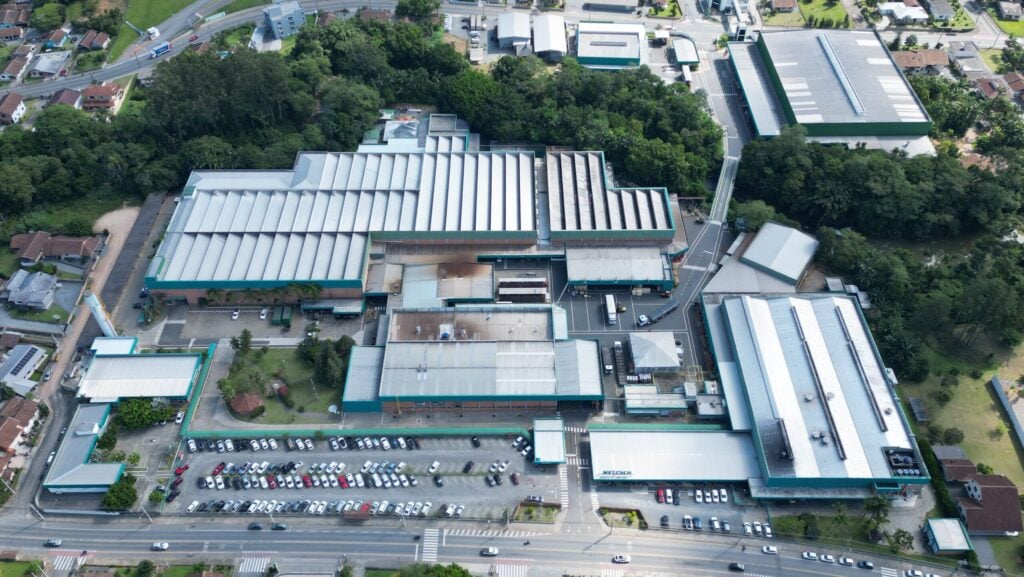
“The material flow analysis showed that the biggest lever was not additional hall space, but the arrangement of the production processes.”
Instead of extending the hall, NETZSCH opted for a fundamental restructuring. Digital factory planning created the transparency required for this investment decision.
For the US site, the aim was to strengthen local production and in-house manufacturing. Using digital factory planning, a restructuring concept was developed that allows the existing hall to remain in use for the years ahead while covering the required floor space. Here, too, visTable® provided the basis for a forward-looking investment decision.
A Standard Process for Factory Planning
By successfully merging three plants at a single site, NETZSCH has not only completed a complex site consolidation. The project also laid the foundation for a new way of factory planning throughout the entire company.
Factory planning and optimization projects within the NETZSCH Group are now consistently planned digitally first, before they are implemented – in Waldkraiburg as well as at the international sites.